
Vision
Peripass vision
No autonomous logistics
without autonomous yards.
Our vision for how logistics becomes autonomous.
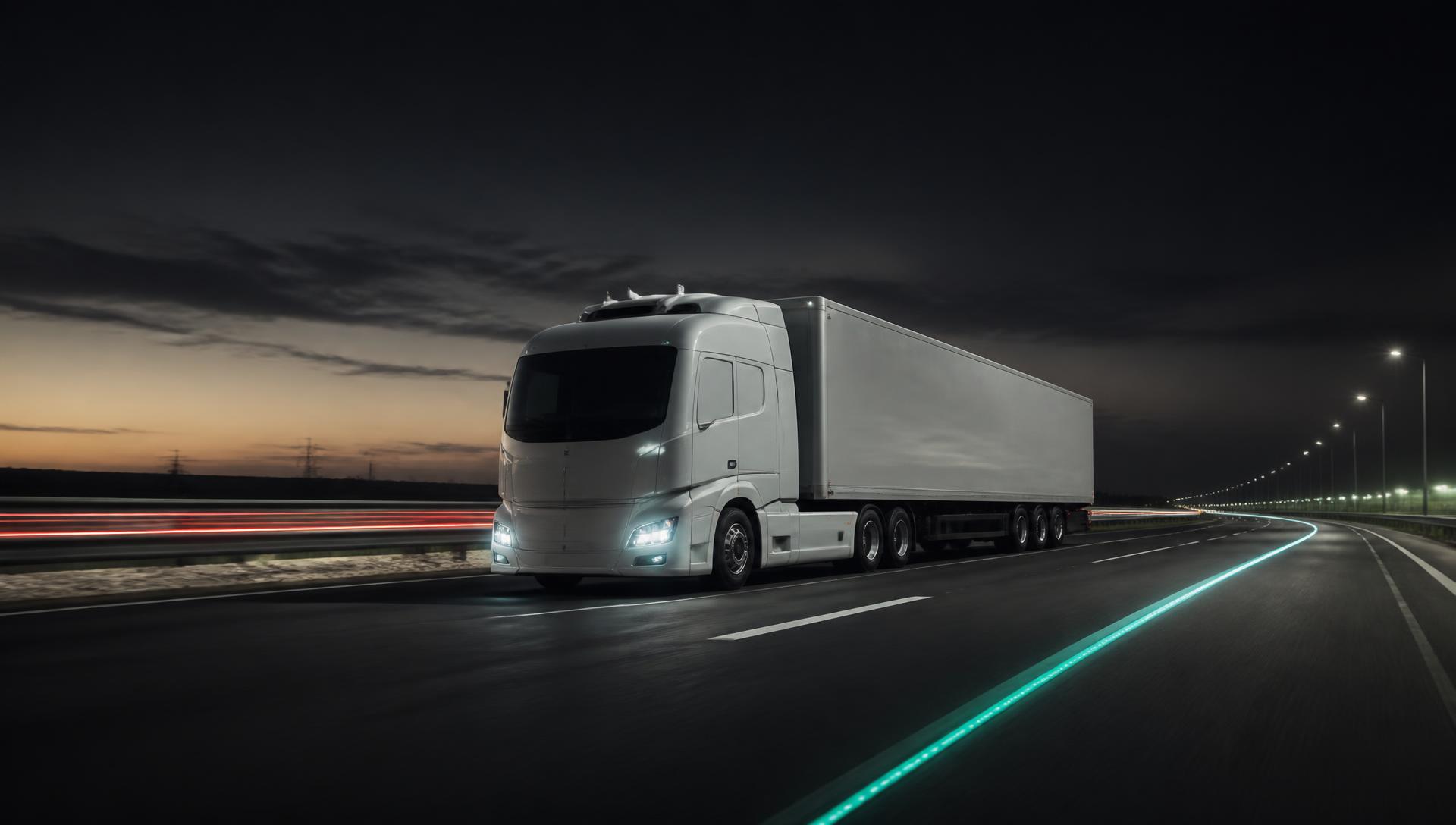
At Peripass, we believe the road to autonomous logistics will unfold in stages. Autonomous trucks will first prove themselves on predictable long-haul routes. But logistics does not end on the highway. The hubs, yards and physical infrastructure around every movement have to evolve too.
See how we believe it will evolveThe road to autonomous logistics
One journey, four shifts.
Step 1
Autonomous long-haul
Predictable highway routes automate first. We expect autonomous corridors to connect ports and industrial regions before anything else changes.
Step 2
Transfer hubs bridge the transition
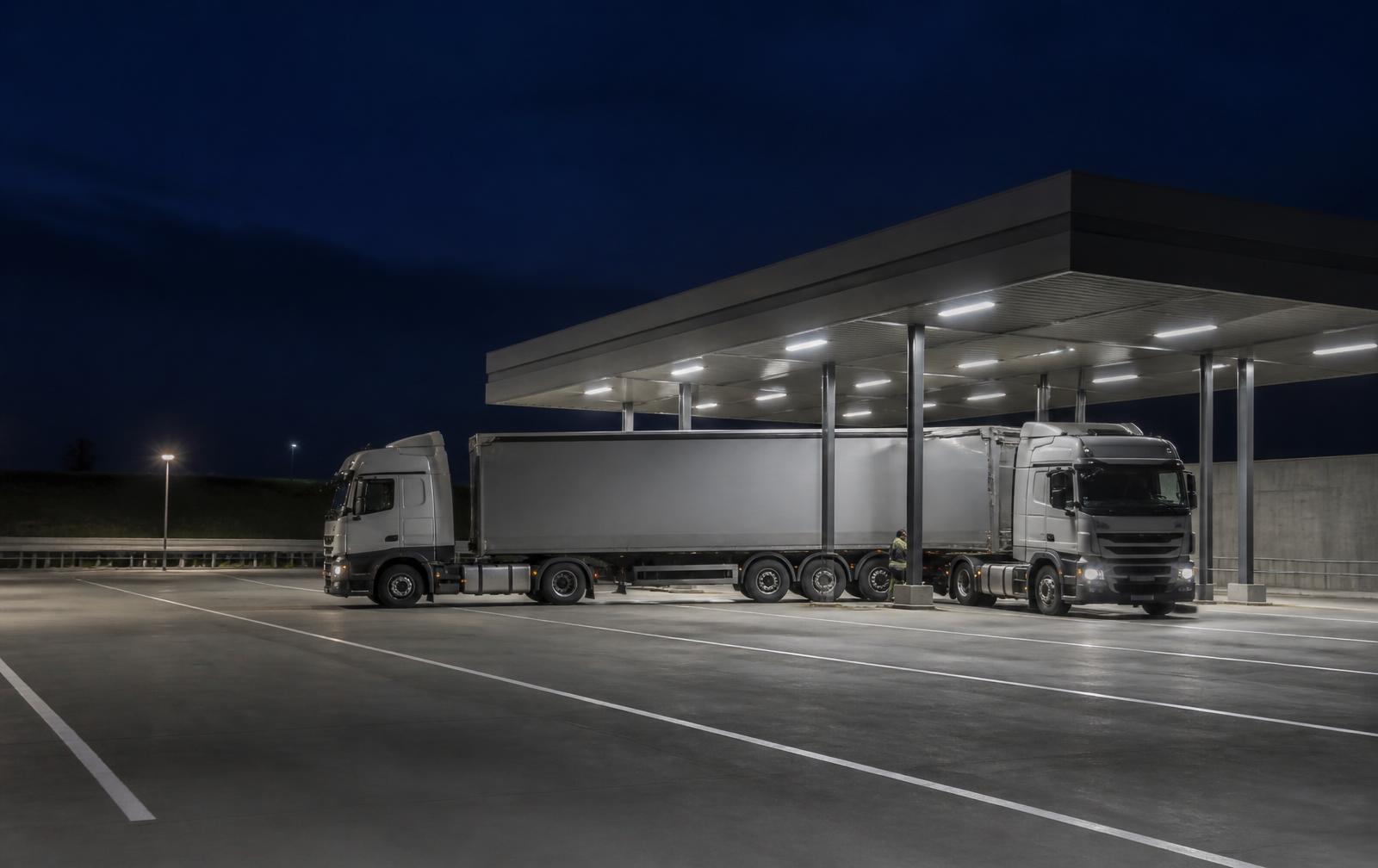
Autonomous long-haul hands over to human-driven local transport near ports and industrial areas. We see the hub as designed logistics infrastructure, not a parking lot.
Step 3
Yards evolve towards autonomy
The same yard, three stages. The shift we expect is not new hardware on a new site — it is a yard that moves from reacting to trucks to knowing what is coming.
Stage 1
Manual
Guardhouses, phone calls, paperwork and manual dispatching. The yard reacts to whatever pulls up at the gate.
Stage 2
Automated
Self-service arrivals, connected infrastructure and automated workflows. The routine stops being handled by hand.
Stage 3
Autonomous
Arrivals, access and movements are coordinated automatically. The yard knows what is coming and prepares for it.
Step 4
From one yard to many
Multiple yards can increasingly be coordinated centrally, while people focus on the exceptions. The system runs the routine itself; only what matters surfaces.
The connected yard
The yard has to think as one system.
Autonomy does not come from one camera, one barrier or one piece of software. It comes from connecting the physical and digital environment around every movement.
Detect
Cameras, ANPR and sensors register the arrival.
Know
Transport, load and appointment are matched.
Decide
The destination and the next step are determined.
Move
Barriers respond, the route lights up, the truck moves.
What this unlocks
When the yard is ready, autonomy can go further.
As yards become more connected and autonomous, vehicles no longer need to stop at the edge of an autonomous corridor. The yard already knows what is arriving, when it will arrive, what it is carrying and where it needs to go. We expect that to create the conditions for autonomous vehicles to travel directly into autonomous-ready sites.
Transfer hubs still matter
The hub doesn't disappear.
Transfer hubs remain important nodes for waiting, staging, handovers, checks, charging and shared services — helping keep congestion away from industrial sites and optimising the wider transport network.
The big vision
- Hubs.
- Yards.
- Vehicles.
- Infrastructure.
- Data.
- People.
Orchestrated as one network.
That is autonomous logistics.
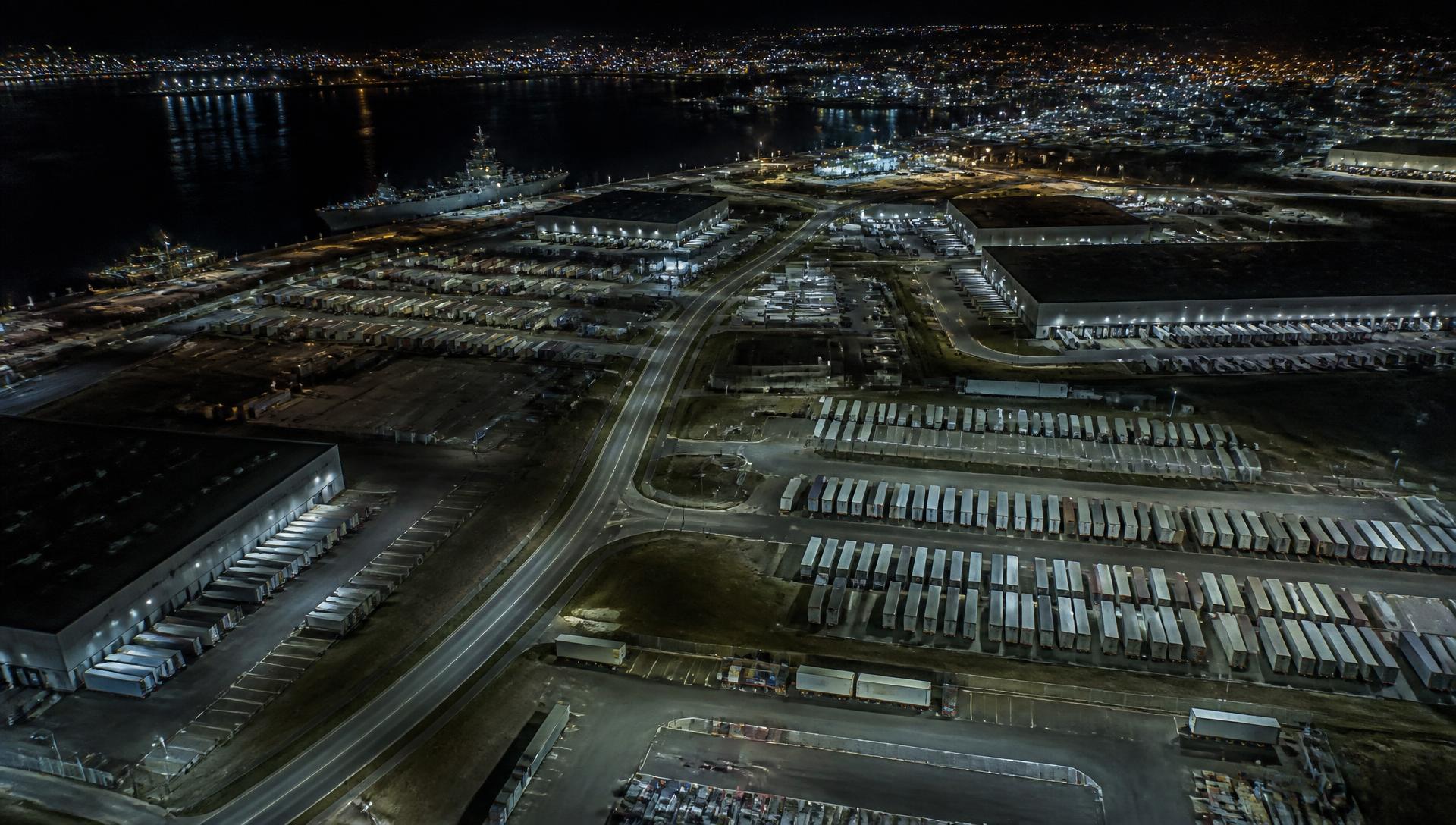
We see this evolving from a single yard outward: yards, transfer hubs, an industrial area, a port, a wider network — physical movements and information flows operating together.
Yard execution for autonomous logistics.
We are building today's yard execution platform with tomorrow's autonomous logistics network in mind.